About
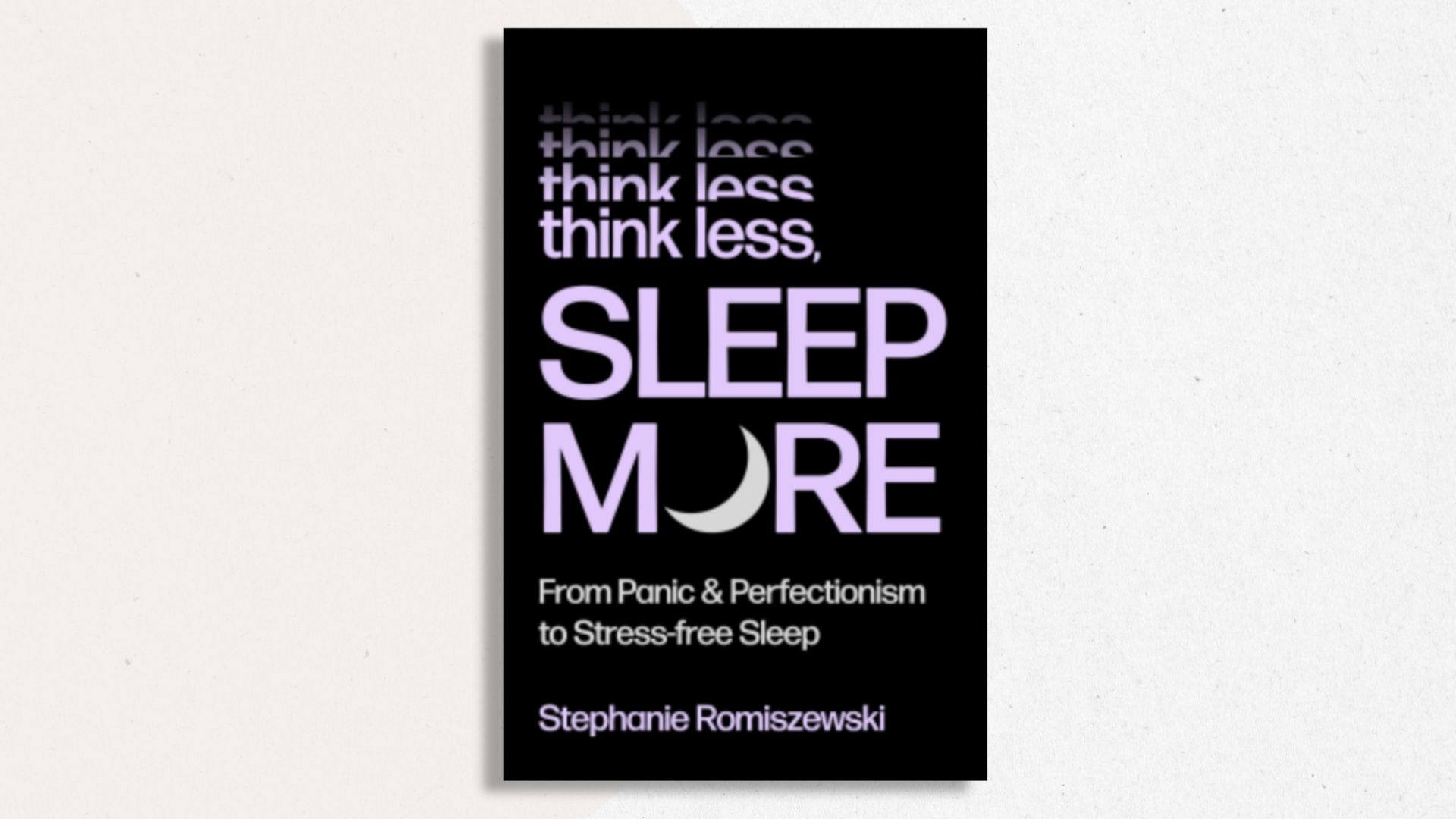
Sleep anxiety is exhausting in its own right, as the very cycle of lying awake worrying about not sleeping creates its own kind of fatigue. Stephanie Romiszewski’s new book, Think Less, Sleep More to help interrupt that cycle — and to us, it's one of the most refreshing, encouraging books on the subject we've encountered.
As a renowned sleep physiologist, and Chief Medical Officer and Co-Founder of the UK's Sleepyhead Clinic and re:sleep, Romiszewski's approach is simple but radical: she posits you'll regain control not through perfection, but by letting go of the need to constantly manage your sleep.
She delivers on this with warmth, understanding, and some delightfully counterintuitive insights that not only challenge what we've been told about rest, but induce a bit of relaxation on the subject in the process.
Among the most liberating revelations from the book:
You are not broken. Sleep was never meant to be as complicated as modern society has made it. “Good sleep” is not necessarily a solid, uninterrupted block of rest. Consistency is better than control. Trust your body.
Romiszewski has helped thousands of patients sleep better so far in her career, and advocates for strengthening your overall sleep baseline, saying “if you train for a marathon by only running when you feel like it, you're not going to get very far. Sleep is no different.”
Beyond encouragement and understanding, there’s good learning to be had in Think Less, Sleep More — not just in sleep theory, but her take on the practice of sleep.
She explains that sleep variation is normal, and that there is no one-size-fits-all when it comes to sleep — not between people, and not even for yourself throughout your week, let alone life.
She specifically addresses menopause and hormonal changes (particularly brutal not just because of broken sleep, but because of its unpredictability), neurodiversity and sleep (if your brain works differently during the day, sleep can be harder to settle into, and never quite as refreshing), and chronic illness and sleep (illness changes everything, including sleep, yet there's an angst that no matter what's going on in the body, sleep could help “fix” things, calling out arthritis, fibromyalgia, and other chronic pain disorders specifically).
One of the book's most valuable sections tackles what Romiszewski calls “the sleep tools trap” — the psychological cost of placing too much responsibility and faith in sleep supplements and tools, explaining how they actually do or do not impact truly good sleep.
She explores how our cultural obsession with optimizing sleep has arguably made it worse, and offers a framework for her take on sleep rules: the important ones, the overrated ones, and the nice-to-have ones.
She also provides an insightful exercise for determining how much or little sleep is actually impacting your day-to-day discomfort versus other factors you might be blaming on poor rest.
It's worth noting that this isn't a book for chronic insomnia or medical sleep disorders. Romiszewski does touch on these conditions, but mostly to help point readers toward more focused, specialized support where needed. For those dealing with sleep anxiety or want to explore whether it’s their sleep that’s in fact making them tired, however, this book lands as a welcome resource.
In all, Think Less, Sleep More is presented as incredibly informative without being a slog to get through.
It reads like you’ve run into an old friend at the grocery store while holding a jar of melatonin, prompting the topic of sleep to come up. Except that old friend is a world renowned professional expert who collaborates with Harvard and the NHS on sleep, and is ready to give you both meaningful affirmation *and* actionable tips to help get you feeling well and on track. Like a good shoulder-squeeze pep talk that will set you forth into the night — quite literally and welcomingly.
-----
Think Less, Sleep More
by Stephanie Romiszewski
Published July 2026
via St. Martin's Press