About
Burnout rarely arrives as being obvious. For many, it can show up as emotional flatness, unexplained irritability, a creeping sense of disconnection from what once felt meaningful, or the particular exhaustion of caring for everyone and everything while running on empty yourself.
It's also rarely *just* about work.
And yet, most burnout resources tend to treat it as though it is.
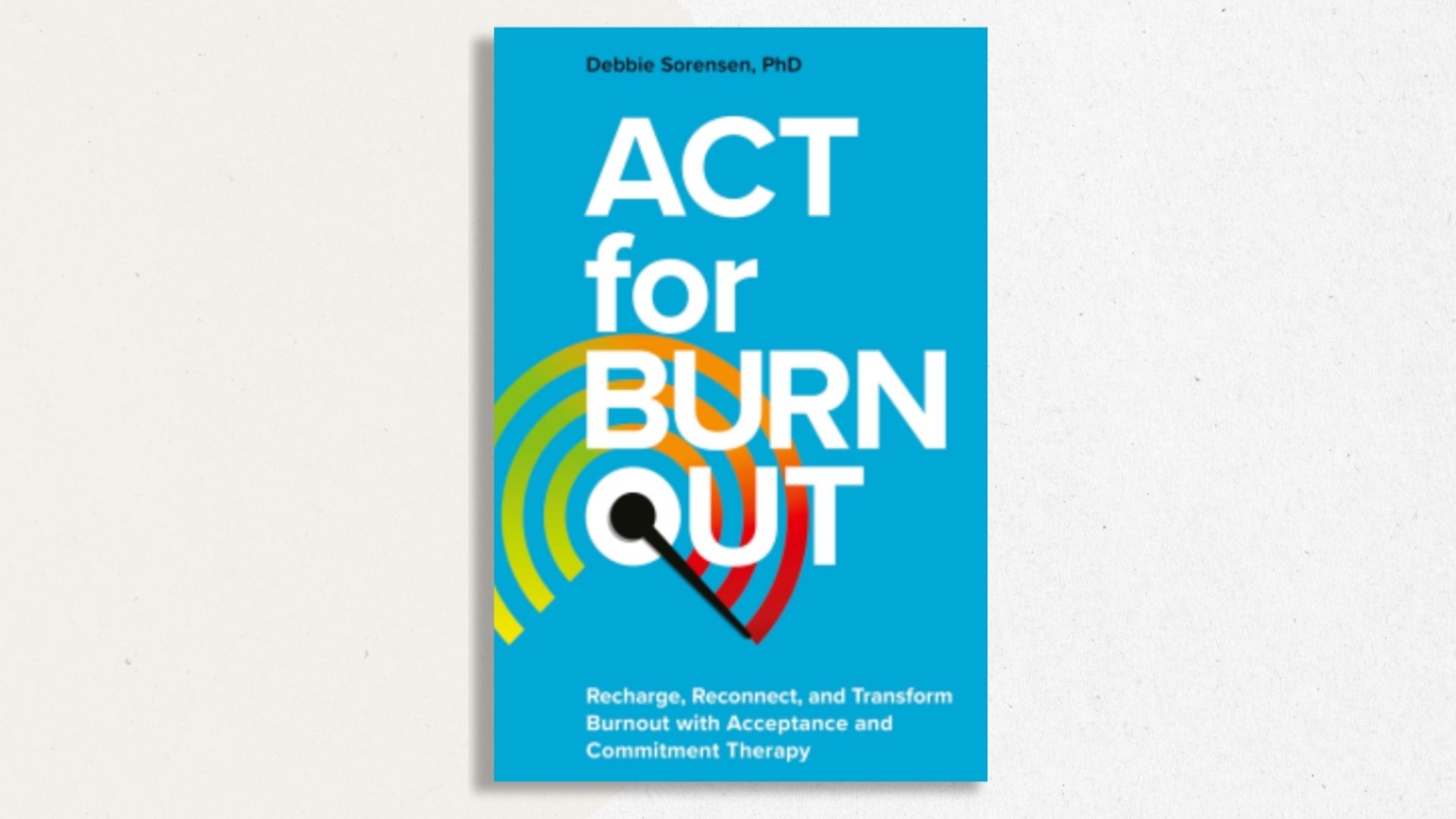
This is what makes ACT for Burnout by Clinical Psychologist, author, and podcast host Dr. Debbie Sorensen worth your attention if you’re struggling.
To be fair, this book is no overt exception to the above as it *is* primarily written through an occupational burnout lens. That framing is intentional, and we don’t fault the book for it whatsoever.
Workplace burnout is a beast, and is the cause of many cases of burnout.
But here's what matters for readers navigating this hurdle of any kind: the core tools Dr. Sorensen offers through Acceptance and Commitment Therapy (ACT) can be considered as support beyond occupational burnout.
Psychological flexibility, values reconnection, and learning to accept difficult internal experiences rather than suppress or fight them — these concepts can be put toward caregiving burnout, chronic illness burnout, academic burnout, and more. What matters more than the type, it seems, is the layered exhaustion that comes from living out of alignment with what actually matters to you.
Building on her Ph.D. in Psychology from Harvard University, Dr. Sorensen’s approach to incorporate ACT into burnout recovery is refreshingly different from many alternative frameworks. Rather than working to eliminate difficult emotions or replace negative thoughts with positive ones, it feels more rooted in ‘real life,’ and works to build the capacity to hold discomfort while still moving forward.
Dr. Sorensen is careful to distinguish acceptance from resignation. Acceptance here looks to mean acknowledging reality without wasting energy resisting it, freeing that energy for something more intentional. There's no hustle culture, no optimization framework, no suggestion that burnout is a time management problem. Instead, the book encourages slowing down to reconnect with what genuinely matters, suggesting a values-based approach that helps support sustainable recovery rather than performance recovery.
To that end, one of the book's most insightful offerings is its values clarification work. These exercises are designed to help identify personal values versus external expectations, address “should-based” living, and support the kind of identity reassessment that often accompanies midlife, chronic illness, or major life transition. While, again, it’s through a workplace point of view, the concepts are transferable enough that those who are feeling depleted but can't quite identify why, can find this section helpful and clarifying.
Most importantly in our opinion is that the book is notably compassionate in its tone. Dr. Sorensen is non-blaming, grounded, and refreshingly free of toxic positivity, acknowledging the systemic and cultural contributors to burnout rather than placing all responsibility on the individual. This feels both validating and rare in today’s climate that often gaslights, dancing wilfully around these critical factors.
ACT for Burnout’s format supports its intended audience’s needs, as well. Chapters are broken into short, manageable sections, making it genuinely accessible for readers who are already struggling to concentrate. (Which… Let’s be real, if you're reaching for a burnout book, it is often exactly where you are.)
To that end, a few considerations: readers in acute crisis may find the approach initially abstract, as the benefits of ACT build through application rather than immediate transformation. Those seeking rapid symptom relief or prescriptive detox plans may initially resist its pace. And the workplace framing is fantastic for those in the thick of occupational burnout. For other forms of burnout, the book is helpful as well, but does need some self-adaptation to help apply its concepts to caregiving, chronic illness, or other forms of depletion.
In all, for anyone feeling emotionally flat, running on sustained depletion, or living a life that no longer feels aligned with who they are, this book offers a clear, compassionate framework for recovery support.
— — —
ACT for Burnout: Recharge, Reconnect, and Transform Burnout with Acceptance and Commitment Therapy
by Debbie Sorensen
Published January 2024
via Jessica Kingsley Publishers